Ciencias Psicológicas, v19(1)
January-June 2025
10.22235/cp.v19i1.4130
Original Articles
Parental mediation in the use of screens by children
and adolescents: a systematic literature review
Mediación parental en el uso de pantallas por niños y adolescentes:
una revisión sistemática de la literatura
Mediação parental no uso de telas por crianças e adolescentes:
uma revisão sistemática da literatura
Julia Flaibam Giovanelli1, ORCID 0009-0003-1209-3881
Laura Soares da Silva2, ORCID 0000-0003-2726-4842
Wanderlei Abadio de Oliveira3, ORCID 0000-0002-3146-8197
Adriana Scatena4, ORCID 0000-0002-4034-1251
Fernando Ferreira Semolini5, ORCID 0009-0001-9458-1111
André Luiz Monezi Andrade6, ORCID 0000-0003-0111-8935
1 Pontifícia Universidade Católica de Campinas, Brazil
2 Pontifícia Universidade Católica de Campinas, Brazil
3 Pontifícia Universidade Católica de Campinas, Brazil
4 Universidade Federal de São Paulo, Brazil
5 Pontifícia Universidade Católica de Campinas, Brazil
6 Pontifícia Universidade Católica de Campinas, Brazil, [email protected]
Abstract:
Parental mediation is essential for guiding the appropriate use of devices, aiming to minimize potential negative impacts such as anxiety, depression, and low self-esteem. This systematic review investigated the influence of different parental mediation styles on the use of digital media by children and adolescents. A new method for searching and classifying articles was used, employing the ASReview software, which utilizes a machine learning model to enhance the efficiency and accuracy of article selection. The review followed all procedures required by PROSPERO. Initially, 28,964 articles were identified, and based on ASReview, 359 articles were read, of which 27 were included in the study. The quality of the manuscripts was assessed using the Critical Appraisal Checklist for Analytical Cross-Sectional Studies. The main findings indicated that parental mediation is a significant protective factor against excessive internet use, gaming dependence, and cyberbullying. Active and restrictive mediation strategies proved effective in moderating the relationship between digital media use and mental health outcomes, highlighting the critical role of parents in guiding their children's digital consumption.
Keywords: parental mediation; adolescents; digital media.
Resumen:
La mediación parental es esencial para orientar el uso adecuado de los dispositivos, con el objetivo de minimizar los posibles impactos negativos, como ansiedad, depresión y baja autoestima. Esta revisión sistemática investigó la influencia de los diferentes estilos de mediación parental en el uso de medios digitales de niños y adolescentes. Se utilizó un nuevo método de búsqueda y clasificación de artículos con el software ASReview, que emplea un modelo de aprendizaje automático para aumentar la eficiencia y la precisión en la selección de artículos. La revisión siguió todos los procedimientos exigidos por PROSPERO. Inicialmente, se identificaron 28.964 artículos y, con base en ASReview, se leyeron 359, de los cuales 27 fueron incluidos en el estudio. La calidad de los manuscritos fue evaluada con el Critical Appraisal Checklist for Analytical Cross-Sectional Studies. Los principales hallazgos indicaron que la mediación parental es un factor protector significativo contra el uso excesivo de internet, la dependencia de los juegos y el ciberacoso. Las estrategias de mediación activa y restrictiva demostraron ser eficaces en la moderación de la relación entre el uso de medios digitales y los resultados de salud mental, resaltando el papel crítico de los padres en la orientación del consumo digital de sus hijos.
Palabras clave: mediación parental; adolescentes; medios digitales.
Resumo:
A mediação parental é essencial para orientar o uso adequado de dispositivos, visando minimizar potenciais impactos negativos, como ansiedade, depressão e baixa autoestima. Esta revisão sistemática investigou a influência dos diferentes estilos de mediação parental no uso de mídias digitais por crianças e adolescentes. Utilizou-se um novo método de busca e classificação de artigos com o software ASReview, que emprega um modelo de aprendizado de máquina para aumentar a eficiência e a precisão da seleção de artigos. A revisão seguiu todos os procedimentos exigidos pela PROSPERO. Inicialmente, identificou-se 28.964 artigos e, com base no ASReview, foram lidos 359, dos quais 27 foram incluídos no estudo. A qualidade dos manuscritos foi avaliada utilizando o Critical Appraisal Checklist for Analytical Cross-Sectional Studies. Os principais achados indicaram que a mediação parental é um fator protetor significativo contra o uso excessivo da internet, dependência de jogos e cyberbullying. Estratégias de mediação ativa e restritiva mostraram-se eficazes na moderação da relação entre o uso de mídias digitais e os desfechos de saúde mental, ressaltando o papel crítico dos pais na orientação do consumo digital de seus filhos.
Palavras-chave: mediação parental; adolescentes; mídias digitais.
Received: 06/24/2024
Accepted: 05/09/2025
Internet use has become a widespread reality in daily life, encompassing approximately 67% of the global population in 2023 (International Telecommunication Union, 2023). Consequently, connectivity becomes an activity introduced increasingly early in human development, spanning the stages of childhood and adolescence (Andrade, Lobato et al., 2024). In 2020, one in three children and adolescents between 3 and 17 years old had internet access globally, and in Brazil, this number reached 92% of the population aged 9 to 17 years in 2022 (Comitê Gestor da Internet (CGI), 2023; United Nations Children's Fund (UNICEF), 2020).
Digital technologies and the internet offer this population a wide range of research, entertainment, and communication tools, the leading online activities in this age group (CGI, 2023). However, this facilitation of access to information can expose this population to various risk factors, such as difficulty organizing important tasks in daily life, increased usage time, and even behaviors associated with digital addiction (Andrade, Scatena et al., 2023). Furthermore, some authors point to significant relationships between prolonged screen exposure and negative impacts on the mental health of children and adolescents, such as depression (Fardouly et al., 2018), anxiety (Hsieh et al., 2018), decreased well-being (Milosevic et al., 2022), low self-esteem (Schmuck et al., 2023), and sleep disturbances (Cruz et al., 2024). Internet use without adequate parental supervision, especially among the youngest, can also lead to exposure to aggressive, offensive, and discriminatory content, as well as behaviors such as cyberbullying (Machimbarrena et al., 2018). There are also risks of a pornographic nature, including exposure to explicit videos and materials, the presence of online sexual predators, and the danger of disclosing inappropriate photos or personal information (Agarwal & Dhanasekaran, 2012).
Given these vulnerabilities, monitoring and guiding children and adolescents regarding internet use through parental mediation becomes essential (Andrade, Di Girolamo et al., 2023). This term refers to parental practices and attitudes for regulating and managing their children's use of communication tools, aiming to minimize risks and threats (Ren & Zhu, 2022). There are three mediation strategies: restrictive, active, and participative (Cabello-Hutt et al., 2017). The first involves establishing rules regarding technology use, with defined time and hours of use per day (Jiow et al., 2016). Active mediation is characterized by communication and instruction from parents about risks and safe online practices (Clark, 2011). Lastly, participative mediation is based on the joint and shared use of technology between parents and children (Jiow et al., 2016).
Parental mediation has been identified as an essential tool for healthy development in the face of digital media use. It is a significant preventive factor for negative technology-related consequences (Schwartz & Pacheco, 2021). In general, the absence of parental mediation and lack of knowledge about children's online activities are associated with excessive internet use patterns and even dependency (Wang & Ngai, 2021). On the other hand, parental participation, supervision, and guidance regarding internet use are linked to a healthier and more nurturing family environment (Ren & Zhu, 2022).
Considering the widespread adoption of digital technologies among children and adolescents, concerns arise regarding the risk factors above and excessive internet use. Parental mediation, in turn, can mitigate online dangers and act as a protective measure for the younger population (Andrade, Passos et al., 2024; Milosevic et al., 2022). Significant advancements have been made in understanding the impact of parental mediation on youth's digital media usage, particularly concerning their mental health and behavior (Nielsen et al., 2019). However, many prior reviews have encountered limitations due to their specific cultural or methodological focuses, as well as outdated screening methods.
This current review seeks to address these gaps. By employing a machine learning-assisted selection strategy, we are able to explore a diverse range of parental mediation styles across various cultural contexts. This approach enhances the comprehension of how parental influence shapes the interactions of children and adolescents with digital technology, providing valuable insights for families everywhere.
Therefore, this research aimed to identify the influence of different styles of parental mediation on the use of digital media among children and adolescents and its role as a protective factor against emotional problems through a systematic literature review. As research hypotheses, it would expect that children and adolescents with higher levels of parental mediation will present lower digital media usage time. In addition, we hypothesize that parental mediation will be associated with lower symptomatology of emotional problems.
Method
Study characterization
A systematic literature review was conducted following the guidelines of the Preferred Reporting Items for Systematic Reviews and Meta-Analyses (PRISMA) (Page et al., 2021). This approach allows the use of findings from relevant research to contribute to evidence-based health practice.
Research question identification
The central question of this study is: "What is the impact of different parental mediation strategies on online behavior and the mental health of children and adolescents, considering the risks associated with screen use?" This question was based on the FINER criteria (Feasible, Interesting, New, Ethical, Relevant) proposed by (Cummings et al., 2013). The question is feasible because there is a wide range of available data for analysis in the literature. Given the increasing digital interaction of youth and its potential implications for well-being, the topic is interesting for parents, educators, and researchers. It is an innovative question as it explores the variable effect of mediation practices, addressing underexplored dimensions of parental mediation practices in diverse cultural and methodological contexts. Additionally, it is ethical to investigate how these practices can protect against online risks, contributing to creating a safe digital environment. Finally, the study is relevant as it addresses urgent concerns about the influence of technology on child development, guiding effective parental mediation strategies.
Inclusion and exclusion criteria
The PECOS strategy (Population, Exposure, Comparison, Outcomes, Study design) was used to define and direct inclusion and exclusion criteria (Morgan et al., 2018). The population was delimited to parents whose children have internet and digital media access, and the exposure was parental mediation of this usage. The comparison included different types of parental mediation and their outcomes. Regarding outcomes, it was considered that parental mediation is related to less frequent usage and decreased emotional problems resulting from internet use.
The literature search was conducted using the Scopus and PSYCNET databases. Other platforms were excluded due to the difficulty of exporting data on a large scale. The search strategy was defined through descriptors previously consulted in the Medical Subject Headings (MESH) and Health Sciences Descriptors (DeCS) indexers. The descriptors were combined using boolean operators, forming strings for each database.
The search algorithm consisted of the following descriptors: “parenting” OR “digital parenting” OR “parental control” OR “parental warmth” OR “parental mediation” OR “parenting style” OR “parental regulation” OR “parental monitoring” OR “parental involvement” OR “family communication” AND smartphone addiction OR social media OR digital media OR internet addiction OR dysfunctional internet use OR problematic internet use OR gaming OR game OR depression OR anxiety OR stress OR emotional OR psychological distress OR isolation OR suicide OR aggression OR hostility OR emotional regulation.
Article selection and data extraction
The data were extracted and exported in “.ris format” to the reference management software Zotero to unify the articles from the two research databases. Subsequently, all data were exported to ASreview, an Artificial Intelligence (AI) and machine learning tool used to select and screen textual data on a large scale. The platform was trained by labeling a sample of 5% of articles as relevant or irrelevant according to the research objective, and based on this process, the AI can identify articles similar to those indicated by the programmer (Van de Schoot et al., 2021).
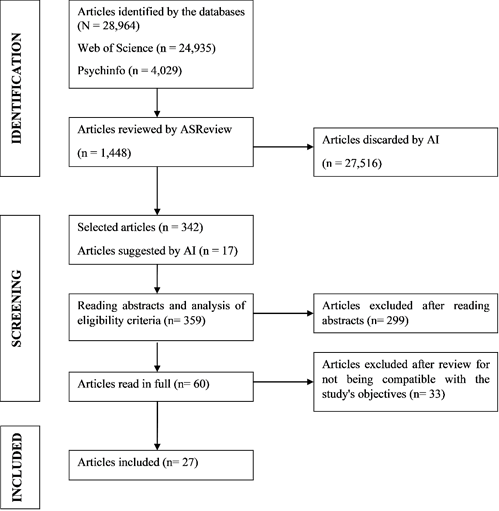
A total of 28,964 articles were found in the databases, and the titles and abstracts of 5% of the articles (n = 1,448) were read, as suggested by ASreview. After the preliminary analysis, 342 articles were classified as relevant, and the AI suggested an additional 17. Next, titles and abstracts were reviewed, resulting in the selection of 60 studies. After full-text reading and eligibility criteria analysis, the final number of articles was 27. Figure 1 describes the PRISMA flowchart of the selection process.
Figure 1: Flow of identification, screening, and selection of articles for the systematic review
Finally, the data from each article was extracted and organized in the Airtable software, with a numerical identifier ordered by publication date and alphabetical order. The following categories were created: authors, country, objectives, methodological design, central theme, instruments used, and sample characteristics (profile, age, size, and gender distribution), as well as results and limitations. The central theme relates to the different subjects investigated in the realm of parental mediation, which were mental health, parental attitudes, problematic internet use, digital gaming disorder, parenting styles, bullying/cyberbullying, smartphone use, risk factors, and apps.
Study evaluation and bias risk
The quality assessment of the manuscripts was conducted using the Critical Appraisal Checklist for Analytical Cross-Sectional Studies (Moola et al., 2020). This method comprises nine questions, with a Yes/No response format, totaling a final score from 1 to 9. The cutoff point for article inclusion was 5, considered on a scale of 5 to 6 as moderate methodological quality and moderate risk of bias. Articles scoring 7 or 8 were classified as having good methodological quality and a low risk of bias (Aromataris et al., 2024). The evaluation and final score for each study is shown in Table 1.
Table 1: Results of methodological quality assessment
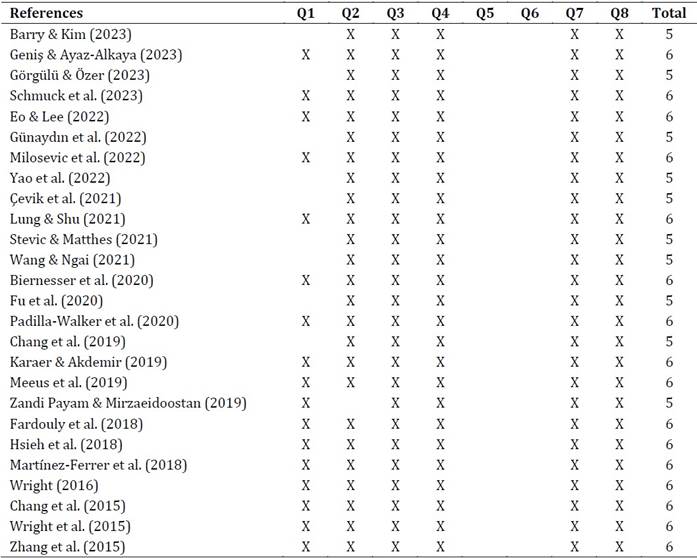
Note: Q1: Were the sample inclusion criteria clearly defined? Q2: Have the study subjects and environment been described in detail? Q3: Was the exposure measured validly and reliably? Q4: Were objective and standardized criteria used to measure the condition? Q5: Were confounding factors identified? Q6: Were strategies for dealing with confounding factors stated? Q7: Were the outcomes measured validly and reliably? Q8: Was appropriate statistical analysis used?
Results
To Table 2 presents data on the selected articles, including information such as authors, year, country of origin of the study, objectives, method used, central theme, instruments, and sample characteristics. The results reveal a predominance of studies from the United States, Taiwan, China, Turkey, and other European, Asian, African, and Oceanian countries. No studies of Latin American origin were found. All research adopted an exploratory approach, highlighting the scarcity of experimental studies.
The total number of participants was 70,298. Some samples were composed exclusively of children or adolescents, while others combined these groups. Additionally, three studies included data from more than one report, collected through pairs of children or adolescents and their caregivers. Several variables related to parental mediation were identified, emphasizing the importance of this practice for healthy development. Among these variables, mental health stands out, particularly in relation to depression, anxiety, self-esteem, technological use disorders, suicidal ideation, and
well-being. Furthermore, there were studies related to parental mediation and social media, cyberbullying, parenting styles, and interpersonal relationships of children and adolescents.
Table 2: This section provides data on article identifiers, authors, year, country, objectives, methodological design, central theme, and instruments used
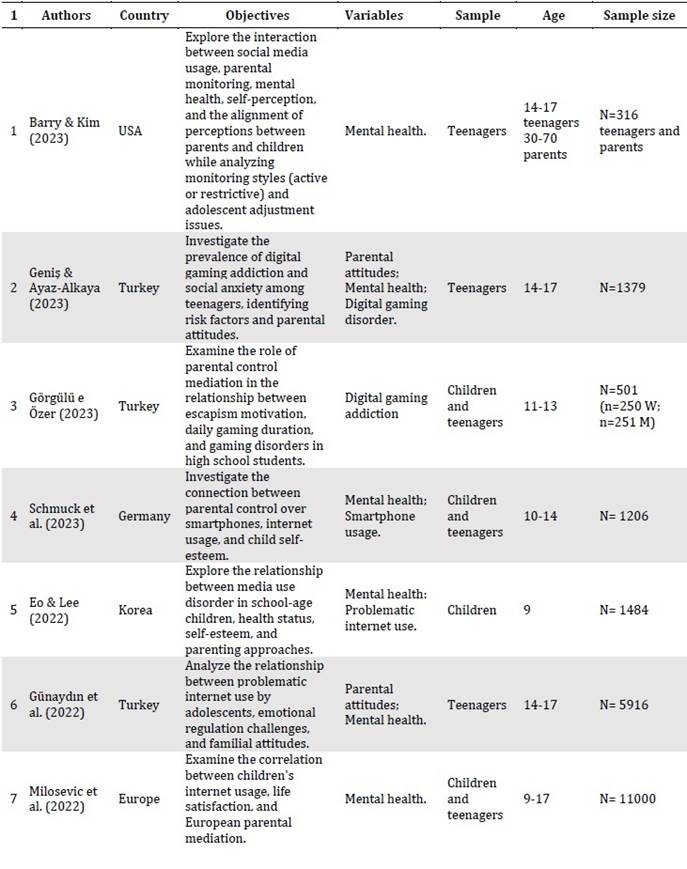
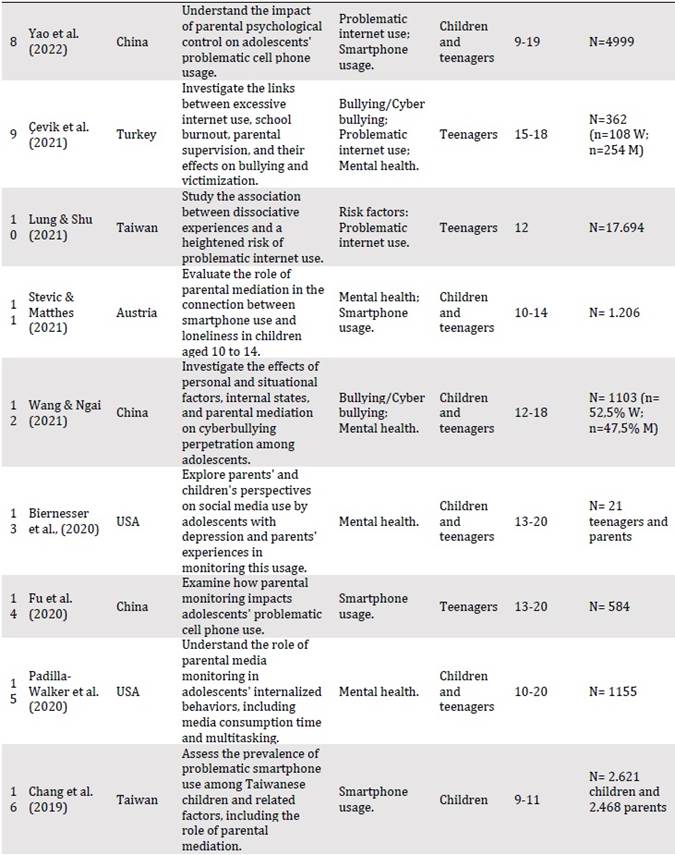
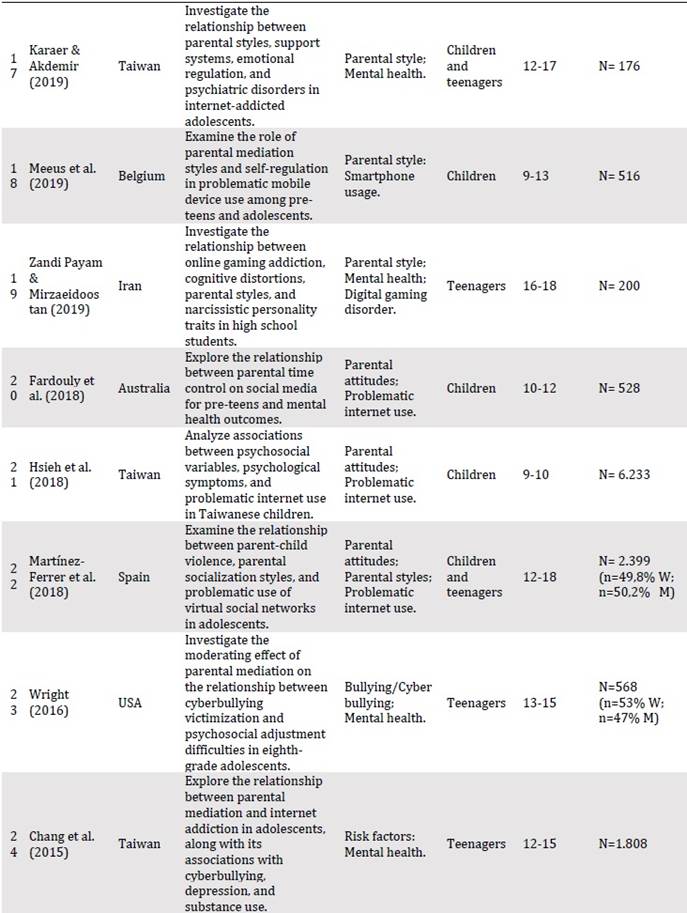
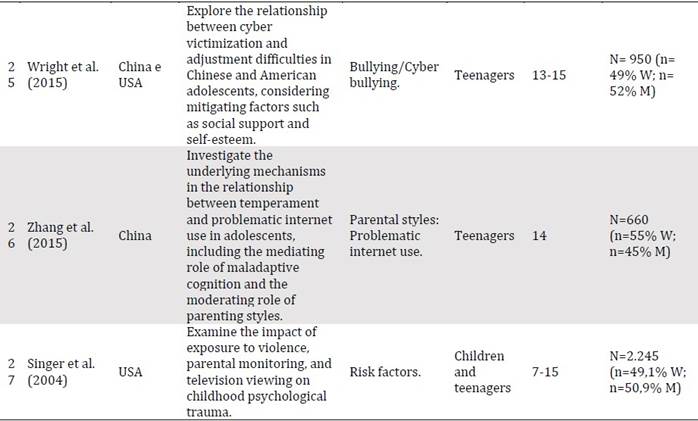
Note: USA: United States of America; W: Woman; M: Men.
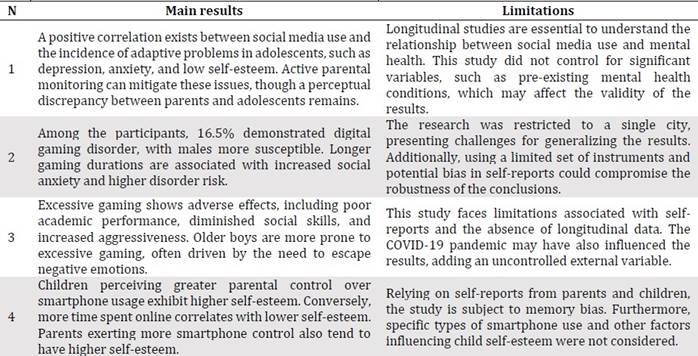
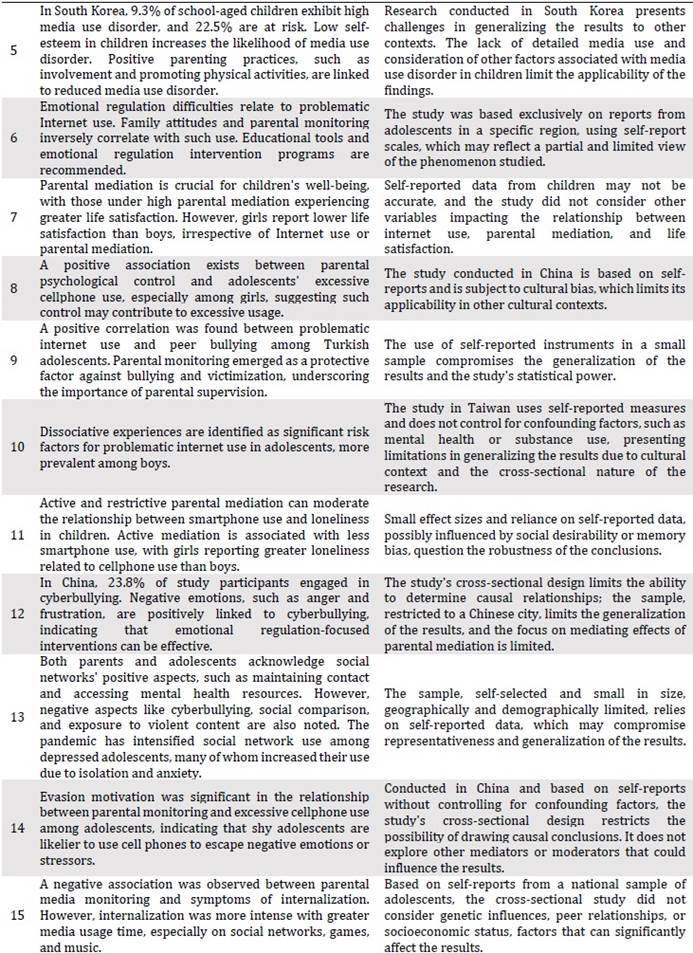
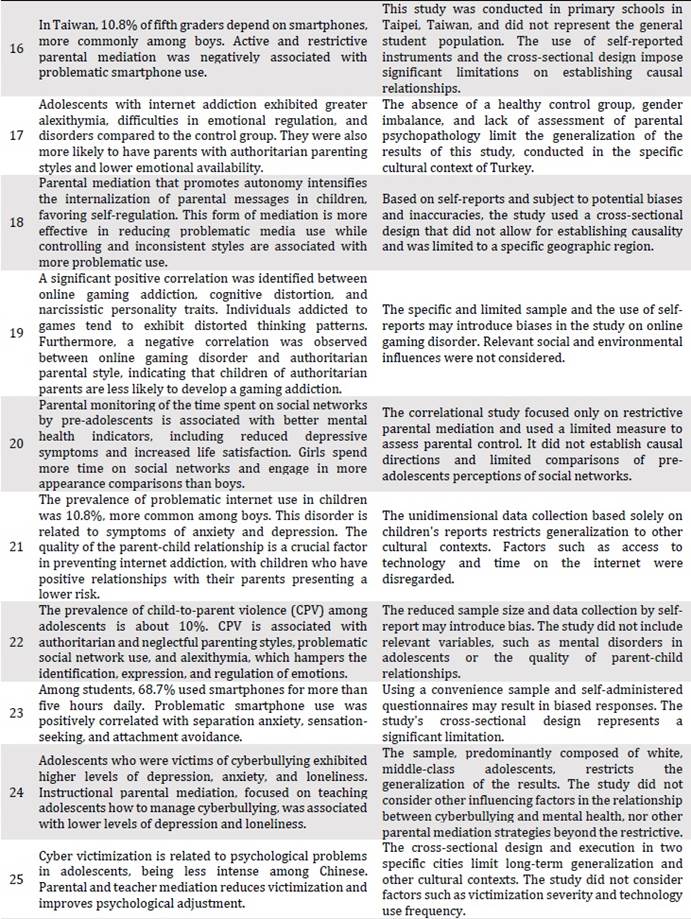
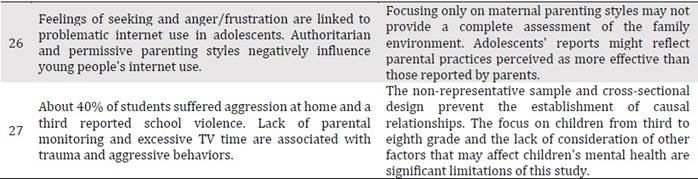
Table 3 summarizes the main findings and limitations of each study. Overall, parental mediation emerges as a protective factor against cyberbullying and mental health problems in children and adolescents. In addition, the quality of the parent-child relationship was also identified as an important aspect for healthy development and reduced use of digital media. As for the limitations, the cultural specificity of the samples stands out, which compromises the generalizability of the data, the self-report data, which are subject to bias, and the cross-sectional design of the studies.
Table 3: Main results and limitations of each study
Discussion
The excessive use of digital media by children and adolescents is linked to a variety of negative phenomena, such as problematic internet use, exposure to inappropriate content, organizational difficulties, and emotional problems (Reichert et al., 2021; Spritzer et al., 2023). In this sense, parental mediation plays an essential role in preventing risk factors and promoting healthy development. In the context of mental health, adolescents with low or no parental mediation have higher levels of anxiety, depression, low self-esteem, aggressiveness, and suicidal ideation, as well as reduced academic performance (Lee et al., 2023; Meeus et al., 2019; Singer et al., 2004). Thus, practices such as setting limits, monitoring, and communication, common in parental mediation, play a crucial role in preventing excessive use and its negative consequences for well-being.
Regarding online risk behaviors, such as cyberbullying, problematic internet use, and exposure to online violence, these phenomena represent threats to the integrity of children and adolescents in the digital age (Ramos et al., 2023; Romualdo et al., 2025). Through unsupervised use, users can protect themselves behind fake profiles and corroborate the practice of cyberbullying and the dissemination of hate speech, in addition to increasing the risk of victimization (Swider-Cios et al. 2023). In this context, parental mediation emerges as an essential shield to prevent these risk behaviors, since in addition to supervising content, it promotes autonomy and the internalization of guidelines, rules, and values established by parents in relation to the proper use of the internet (Meeus et al., 2019; Schmuck et al., 2023). In addition, studies indicate that excessive use of digital technologies, especially when not mediated by parents, is associated not only with greater exposure to violent and sexual content, but also with negative implications for the mental health of individuals (Barry & Kim, 2023; Neophytou et al. 2021; Singer et al., 2004).
Regarding parental mediation strategies, the most investigated were active and restrictive mediation, especially in relation to their moderating role in the relationship between smartphone use and children’s health (Chang et al., 2019; Fardouly et al., 2018; Meeus et al., 2019). Active mediation was associated with lower internet addiction among adolescents and was negatively related to smartphone addiction (Hsieh et al., 2018; Stevic & Matthes, 2021), demonstrating its potential in promoting healthy internet use through guidance, modeling, and encouragement of online self-regulation. On the other hand, restrictive parental mediation was related to lower smartphone use. However, restrictive mediation was not shown to be a protective factor against online victimization, as it focuses more on limiting the time and frequency of use without directly interfering with the quality of the content consumed (Stevic & Matthes, 2021; Wright, 2016).
The results indicate a gender difference in the online activities carried out by children and adolescents. Boys showed a greater tendency to addiction to games, exposure to violent content, and the development of social anxiety and externalizing problems, such as aggressiveness, disobedience, and impulsivity (Rozgonjuk et al., 2023; Zandi Payam & Mirzaeidoostan, 2019). On the other hand, girls showed a greater propensity for Instagram addiction, self-esteem problems due to high social media consumption, higher levels of anxiety, and vulnerability to cyberbullying victimization (Lee et al., 2023; Stevic & Matthes, 2021). In addition, girls also demonstrate a greater benefit from parental mediation, as they tend to seek more parental help than boys (Yao et al., 2022).
Studies that included parental reports indicate a discrepancy in parents’ perception of their effectiveness in parental mediation compared to their children’s perception. Parents tend to report higher levels of mediation than adolescents, suggesting possible communication failures or an overestimation of the strategies adopted by parents (Barry & Kim, 2023; Schmuck et al., 2023). In addition, parenting styles were identified as a crucial aspect for the effectiveness of parental mediation. For example, more authoritarian parenting styles are correlated with emotional regulation difficulties. In this context, children are likely to seek the internet as a space for acceptance and escape from reality for self-regulation, increasing the risk of problematic and excessive use (Hsieh et al., 2018; Martínez-Ferrer et al., 2018). On the other hand, parents who adopt a more democratic parenting style and consistently practice parental mediation tend to have greater self-efficacy in the parental role and, consequently, a better perception of support and protection from their children (Schmuck et al., 2023).
Parental mediation stands out as an important aspect for the healthy development of children and adolescents. However, it is important to emphasize that, beyond this strategy, the quality of family relationships is also an essential factor for well-being, since parents’ emotional involvement with their children promotes autonomy, self-regulation, and the creation of interests beyond the virtual environment (Chang et al., 2015; Eo & Lee, 2022; Hsieh et al., 2018). Thus, functional family bonds, combined with parental mediation, are associated with greater internalization of values and rules by children, which favor protection against the risks posed by the internet (Meeus et al., 2019). It’s important to recognize a limitation in the selection of articles for this review. The criteria primarily focused on studies that examine the negative outcomes associated with internet use, which may have caused us to overlook research showcasing the potential benefits of digital media, particularly when supported by parental involvement. Recent literature suggests that digital engagement can enhance cognitive, emotional, and social development in children and adolescents, especially when parents are actively and positively involved. This omission may have led to a skewed representation of the overall picture, emphasizing the need for caution when generalizing the results.
Conclusion
A general widespread use of the internet by children and adolescents brings along exposure to various risks such as cyberbullying, dependency, and emotional issues like depression, anxiety, and low self-esteem. In this context, parental mediation is crucial in supervising, guiding, and controlling access to certain content and excessive use frequency. Despite providing a comprehensive overview of scientific production in this area, this study highlights the need for more comprehensive research that includes longitudinal aspects, cultural diversity, and the use of standardized instruments.
It is important to acknowledge the limitations of this article. The research was limited to studies from only two databases, which may have excluded relevant works from other sources due to limitations in the number of articles processed by the ASReview software. Additionally, the article was selected through artificial intelligence software, which may introduce bias depending on the data quality and algorithm used. Most of the analyzed studies adopt a cross-sectional design, making it difficult to establish causal relationships between parental mediation and its impacts on children and adolescents’ behavior and mental health. Finally, the diversity in methodologies and assessment instruments makes direct comparison and generalization of results challenging.
References
Agarwal, V., & Dhanasekaran, S. (2012). Harmful effects of media on children and adolescents. Journal of Indian Association for Child and Adolescent Mental Health, 8(2), 38-45. https://doi.org/10.1177/0973134220120203
Andrade, A. L. M., Di Girolamo Martins, G., Scatena, A., Lopes, F. M., de Oliveira, W. A., Kim, H. S., & De Micheli, D. (2023). The effect of psychosocial interventions for reducing co-occurring symptoms of depression and anxiety in individuals with problematic internet use: a systematic review and meta-analysis. International Journal of Mental Health and Addiction, 21(6), 4141-4162. https://doi.org/10.1007/s11469-022-00846-6
Andrade, A. L. M., Lobato, F. B. H., Stange, N., Scatena, A., Oliveira, W. A. D., Kim, H. S., & Lopes, F. M. (2024). The association between gaming disorder and impulsivity: a systematic review. Estudos de Psicologia (Campinas), 41. https://doi.org/10.1590/1982-0275202441e220032
Andrade, A. L. M., Passos, M. A. Z., Vellozo, E. P., Schoen, T. H., Kulik, M. A., Niskier, S. R., & De Souza Vitalle, M. S. (2024). The contextual factors associated with co-occurring substance and problematic internet use in adolescence: a network approach. Trends in Psychology, 32(4), 1252-1267. https://doi.org/10.1007/s43076-022-00232-0
Andrade, A. L. M., Scatena, A., Bedendo, A., Machado, W. D. L., Oliveira, W. A. D., Lopes, F. M., & Micheli, D. D. (2023). Excessive Internet and smartphone use and emotional problems in students of psychology and psychologists. Estudos de Psicologia (Campinas), 40. https://doi.org/10.1590/1982-0275202340e210010en
Aromataris, E., Lockwood, C., Porritt, K., Pilla, B., & Jordan, Z. (2024). JBI Manual for Evidence Synthesis. The Joanna Briggs Institute. https://synthesismanual.jbi.global
Barry, C., & Kim, H. (2023). Parental monitoring of adolescent social media use: relations with adolescent mental health and self-perception. Current Psychology, 43, 2473-2485. https://doi.org/10.1007/s12144-023-04434-2
Biernesser, C., Mair, C., & Coppersmith, D. D. (2020). Social media use and monitoring for adolescents with depression: A qualitative study of parent and adolescent perspectives during the COVID-19 pandemic. JMIR Pediatrics and Parenting, 3(2). https://doi.org/10.2196/21644
Cabello-Hutt, T., Cabello, P., & Claro, M. (2017). Online opportunities and risks for children and adolescents: The role of digital skills, age, gender and parental mediation in Brazil. New Media & Society, 20(7), 2411-2431. https://doi.org/10.1177/1461444817724168
Çevik, Ö., Ata, R., & Çevik, M. (2021). Bullying and victimization among Turkish adolescents: The predictive role of problematic internet use, school burnout and parental monitoring. Education and Information Technologies,26(3),3203-3230. https://doi.org/10.1007/s10639-020-10410-1
Chang, F. C., Chiu, C. H., Chen, P. H., Chiang, J. T., Miao, N. F., Chuang, H. Y., & Liu, S. (2019). Children's use of mobile devices, smartphone addiction and parental mediation in Taiwan. Computers in Human Behavior, 41, 387-394. https://doi.org/10.1016/j.chb.2018.11.048
Chang, F. C., Chiu, C. H., Miao, N. F., Chen, P. H., Lee, C. M., Chiang, J. T., & Pan, Y. C. (2015). The relationship between parental mediation and Internet addiction among adolescents, and the association with cyberbullying and depression. Comprehensive Psychiatry, 57, 21-28. https://doi.org/10.1016/j.comppsych.2014.11.013
Clark, L. S. (2011). Parental Mediation Theory for the Digital Age. Communication Theory, 21(4), 323-343. https://doi.org/10.1111/j.1468-2885.2011.01391.x
Comitê Gestor da Internet. (2023). Pesquisa sobre o uso da Internet por Crianças e Adolescentes no Brasil - TIC Kids 2022.
Cruz, L., Viana, C., Silva, J., Costas, I., Mourão, A. B. (2024). Saúde mental: os riscos em crianças e adolescentes pelo uso excessivo de telas: uma revisão integrativa. Revista Sociedade Científica, 7(1), 657-677. https://doi.org/10.61411/rsc20248117
Cummings, S. R., Browner, W. S., & Hulley, S. B. (2013). Conceiving the research question and developing the study plan. In S. B. Hulley, S. R. Cummings, W. S. Browner, D. G. Grady, & T. B. Newman (Eds.), Designing clinical research (4th ed., pp. 14-22). Lippincott Williams & Wilkins.
Eo, Y. S., & Lee, Y. H. (2022). Associations between children’s health-related characteristics, self-esteem, and fathers’ parenting practices and media addiction among younger school-aged Korean children. International Journal of Environmental Research and Public Health, 19(13), 7773. https://doi.org/10.3390/ijerph19137773
Fardouly, J., Magson, N. R., Johnco, C. J., Oar, E. L., & Rapee, R. M. (2018). Parental control of the time preadolescents spend on social media: Links with preadolescents’ social media appearance comparisons and mental health. Journal of Youth and Adolescence, 47(7), 1456-1468. https://doi.org/10.1007/s10964-018-0870-1
Fu, X., Liu, J., Liu, R. D., Ding, Y., Wang, J., Zhen, R., & Jin, F. (2020). Parental monitoring and adolescent problematic mobile phone use: The mediating role of escape motivation and the moderating role of shyness. International Journal of Environmental Research and Public Health, 17(5). https://doi.org/10.3390/ijerph17051487
Geniş, Ç., & Ayaz-Alkaya, S. (2023). Digital game addiction, social anxiety, and parental attitudes in adolescents: A cross-sectional study. Children and Youth Services Review, 149. https://doi.org/10.1016/j.childyouth.2023.106931
Görgülü, Z., & Özer, A. (2023). Conditional role of parental controlling mediation on the relationship between escape, daily game time, and gaming disorder. International Journal of Mental Health and Addiction, 21(3), 764-778. https://doi.org/10.1007/s12144-023-04557-6
Günaydın, N., Kaşko Arıcı, Y., Kutlu, F. Y., & Yancar Demir, E. (2022). The relationship between problematic Internet use in adolescents and emotion regulation difficulty and family Internet attitude. Journal of Community Psychology, 50, 1135-1154. https://doi.org/10.1002/jcop.22708
Hsieh, Y. P., Shen, A. C.-T., Wei, H.-S., Feng, J. Y., Huang, S. C.-Y., & Hwa, H.-L. (2018). Internet addiction: A closer look at multidimensional parenting practices and child mental health. Journal of Pediatric Nursing, 39, 88-94. https://doi.org/1089/cyber.2018.0435
International Telecommunication Union. (2023). Measuring digital development: Facts and Figures 2023. New York. https://www.itu.int/hub/publication/d-ind-ict_mdd-2023-1/
Jiow, H. J., Lim, S. S., & Lin, J. (2016). Level Up! Refreshing Parental Mediation Theory for our digital media landscape. Communication Theory, 27(3), 309-328. https://doi.org/10.1111/comt.12109
Karaer, Y., & Akdemir, D. (2019). Parenting styles, social support, and emotion regulation in adolescents with internet addiction. Comprehensive Psychiatry, 92, 22-27. https://doi.org/10.1016/j.comppsych.2019.03.003
Lee, J., Kim, J., Lee, H., Park, J., Mallonee, J., & Lee, J.M. (2023). Differential associations among cyberbullying victimization, parental monitoring, and suicidal thoughts and behaviors in male and female college students. Journal of Evidence-Based Social Work, 20(6), 851-867. https://doi.org/10.1080/26408066.2023.2230204
Lung, F.W., & Shu, B. C. (2021). Dissociative experience and problematic Internet use in a national birth cohort study. International Journal of Environmental Research and Public Health, 18(22). https://doi.org/10.3390/ijerph182211848
Machimbarrena, J. M., Calvete, E., Fernández-González, L., Álvarez-Bardón, A., Álvarez-Fernández, L., & González-Cabrera, J. (2018). Internet risks: An overview of victimization in cyberbullying, cyber dating abuse, sexting, online grooming and problematic Internet use. International Journal of Environmental Research and Public Health, 15(11), 2471. https://doi.org/10.3390/ijerph15112471
Martínez-Ferrer, B., Romero-Abrio, A., Moreno-Ruiz, D., & Musitu, G. (2018). Child-to-parent violence and parenting styles: Its relations to problematic use of social networking sites, alexithymia, and attitude towards institutional authority in adolescence. Psychosocial Intervention, 27(3), 163-171. https://doi.org/10.5093/pi2018a24
Meeus, A., Eggermont, S., & Beullens, K. (2019). Constantly connected: The role of parental mediation styles and self-regulation in pre- and early adolescents’ problematic mobile device use. Human Communication Research, 45, 119-147. https://doi.org/10.1093/hcr/hqy015
Milosevic, T., Kuldas, S., Sargioti, A., Laffan, K., & O'Higgins Norman, J. (2022). Children's internet use, self-reported life satisfaction, and parental mediation in Europe. Frontiers in Psychology, 12. https://doi.org/10.3389/fpsyg.2021.698176
Moola, S., Munn, Z., Tufanaru, C., Aromataris, E., Sears, K., Sfetcu, R., Currie, M., Lisy, K., Qureshi, R., Mattis, P., & Mu, P. (2020). Systematic reviews of etiology and risk. In E. Aromataris, & Z. Munn (Eds.), Joanna Briggs Institute reviewer’s manual (chapter 7). The Joanna Briggs Institute. https://doi.org/10.46658/jbimes-20-08
Morgan, R. L., Whaley, P., Thayer, K. A., & Schünemann, H. J. (2018). Identifying the PECO: A framework for formulating good questions to explore the association of environmental and other exposures with health outcomes. Environment International, 121(1), 1027-1031. https://doi.org/10.1016/j.envint.2018.07.015
Neophytou, E., Manwell, L. A., & Eikelboom, R. (2021). Effects of excessive screen time on neurodevelopment, learning, memory, mental health, and neurodegeneration: A scoping review. International Journal of Mental Health and Addiction, 19(3), 724-744. https://doi.org/10.1007/s11469-019-00182-2
Nielsen, P., Favez, N., Liddle, H., & Rigter, H. (2019). Linking parental mediation practices to adolescents’ problematic online screen use: A systematic literature review. Journal of Behavioral Addictions, 8(4), 649-663. https://doi.org/10.1556/2006.8.2019.61
Padilla-Walker, L. M., Stockdale, L. A., & McLean, R. D. (2020). Associations between parental media monitoring, media use, and internalizing symptoms during adolescence. Psychology of Popular Media, 9(4), 481-492. https://doi.org/10.1037/ppm0000256
Page, M. J., Moher, D., Bossuyt, P. M., Boutron, I., Hoffmann, T. C., Mulrow, C. D., Shamseer, L., Tetzlaff, J. M., Akl, E. A., Brennan, S. E., Chou, R., Glanville, J., Grimshaw, J. M., Hróbjartsson, A., Lalu, M. M., Li, T., Loder, E. W., Mayo-Wilson, E., McDonald, S., … McKenzie, J. E. (2021). PRISMA 2020 explanation and elaboration: updated guidance and exemplars for reporting systematic reviews. BMJ, 372(160), 1-36. https://doi.org/10.1136/bmj.n160
Ramos, R. F. S., Scatena, A., Kim, H. S., de Oliveira, W. A., & Andrade, A. L. M. (2023). Brazilian Digital Warriors: Unraveling the Nexus of Adolescent Cyber Aggressors, Problematic Internet & Smartphone Use, Emotional Struggles, and Parental Mediation. Trends in Psychology (in press). https://doi.org/10.1007/s43076-023-00338-z
Reichert, R. A., Calixto, F., da Silva, A. M. B., Martins, G. D. G., Barbugli, B. C., Scatena, A., Lessa, R. T., De Micheli, D., & Andrade, A. L. M. (2021). Digital games, shopping, sex, and other addictions: Neuropsychological and behavioral correlates. Drugs and Human Behavior, 443-458. https://doi.org/10.1007/978-3-030-62855-0_32
Ren, W., & Zhu, X. (2022). Parental mediation and adolescents’ Internet use: The moderating role of parenting style. Journal of Youth and Adolescence, 51(8), 1483-1496. https://doi.org/10.1007/s10964-022-01600-w
Romualdo, C., De Oliveira, W. A., Nucci, L. B., Rodríguez Fernández, J. E., Da Silva, L. S., Freires, E. M., Vitta, A. S. L., Semolini, F. F., Ferro, L. da R., De Micheli, D., & Andrade, A. L. M. (2025). Cyberbullying victimization predicts substance use and mental health problems in adolescents: data from a large-scale epidemiological investigation. Frontiers in Psychology, 16. https://doi.org/10.3389/fpsyg.2025.1499352
Rozgonjuk, D., Blinka, L., Löchner, N., Faltýnková, A., Husarova, D., & Montag, C. (2023). Differences between problematic internet and smartphone use and their psychological risk factors in boys and girls: a network analysis. Child and Adolescent Psychiatry and Mental Health, 17(1), 69. https://doi.org/10.1186/s13034-023-00620-z
Schmuck, D., Stevic, A., Matthes, J., & Karsay, K. (2023). Out of control? How parents’ perceived lack of control over children’s smartphone use affects children’s self-esteem over time. New Media & Society, 25(1), 199-219. https://doi.org/10.1177/14614448211011452
Schwartz, F. T., & Pacheco, J. T. B. (2021). Mediação Parental na Exposição às Redes Sociais e a Internet de Crianças e Adolescentes. Estudos e Pesquisas em Psicologia, 21(1), 217-235. https://doi.org/10.12957/epp.2021.59383
Singer, M. I., Miller, D. B., Guo, S., Slovak, K., & Frierson, T. (2004). The role of violence exposure and television viewing in the development of depressive symptoms and violent behaviors among youth. Journal of Community Psychology, 32(5), 505-525. https://doi.org/ 10.1002/jcop.20015
Spritzer, D. T., Andrade, A. L. M., Xavier, A. Z., da Silva, G. T., Kim, H. S., Kaliszewska-Czeremska, K., Laconi, S., Igarashi, T., Passos, I. C., & Hauck, S. (2023). The Self-perception of Text message Dependence Scale (STDS): A Brazilian-Portuguese validation and expansion of its psychometric properties. Current Psychology, 42(21), 17670-17681. https://doi.org/10.1007/s12144-022-02957-8
Stevic, A., & Matthes, J. (2021). The role of parental mediation in the relationship between smartphone use and children's loneliness: A two-wave panel study. Telematics and Informatics, 64. https://doi.org/10.1016/j.tele.2021.101677
Swider-Cios, E., Vermeij, A., & Sitskoorn, M. M. (2023). Young children and screen-based media: The impact on cognitive and socioemotional development and the importance of parental mediation. Cognitive Development, 66. https://doi.org/10.1016/j.cogdev.2023.101319
United Nations Children's Fund. (2020). How many children and young people have internet access at home? Estimating digital connectivity during the COVID-19 pandemic. https://www.itu.int/en/ITU-D/Statistics/Documents/publications/UNICEF/How-many-children-and-young-people-have-internet-access-at-home-2020_v2final.pdf
Van de Schoot, R., De Bruin, J., Schram, R., Zahedi, P., De Boer, J., Weijdema, F., Kramer, B., Huijts, M., Hoogerwerf, M., Ferdinands, G., Harkema, A., Willemsen, J., Ma, Y., Fang, Q., Hindriks, S., Tummers, L., & Oberski, D. L. (2021). An open source machine learning framework for efficient and transparent systematic reviews. Nature Machine Intelligence, 3(2), 125-133. https://doi.org/10.1038/s42256-020-00287-7
Wang, Y., & Ngai, S. (2021). Adolescent cyberbullying perpetration in China: The roles of personal and situational factors, internal states, and parental mediation. Journal of Adolescence, 89, 28-40. https://doi.org/10.1016/j.adolescence.2021.03.006
Wright, M. F. (2016). Longitudinal buffering effects of different types of parental mediation in adolescent cyberbullying. Child Abuse Review, 25(5), 345-358. https://doi.org/10.1002/car.24487
Wright, M. F., Li, Y., Ding, C., & Dong, Q. (2015). Cyber victimization and adjustment difficulties among Chinese and American adolescents: The role of mitigating agents. Cyberpsychology, Behavior, and Social Networking, 9(1), 49-55. https://doi.org/10.5817/CP2015-1-7
Yao, X., Wu, J., Guo, Z., Yang, Y., Zhang, M., Zhao, Y., & Kou, Y. (2022). Parental psychological control and adolescents’ problematic mobile phone use: The serial mediation of basic psychological need experiences and negative affect. Journal of Child and Family Studies, 30(12), 3577-3588. https://doi.org/10.1007/s10826-021-02169-x
Zandi Payam, A., & Mirzaeidoostan, Z. (2019). Online game addiction relationship with cognitive distortion, parenting style, and narcissistic personality traits in students. Iranian Journal of Psychiatry and Clinical Psychology, 25(1), 72-83. https://doi.org/10.32598/ijpcp.25.1.72
Zhang, H., Li, D., & Li, X. (2015). Temperament and problematic internet use in adolescents: A moderated mediation model of maladaptive cognition and parenting styles. Journal of Child and Family Studies, 23(3), 533-543. https://doi.org/10.1007/s10826-014-9990-8
Data availability: The data set supporting the results of this study is not available.
Conflict of interest: The authors declare that they have no conflicts of interest.
Funding: This study did not receive any external funding or financial support.
How to cite: Flaibam Giovanelli, J., Soares da Silva, L., Abadio de Oliveira, W., Scatena, A., Ferreira Semolini, F., & Monezi Andrade, A. L. (2025). Parental mediation in the use of screens by children and adolescents: a systematic literature review. Ciencias Psicológicas, 19(1), e-4130. https://doi.org/10.22235/cp.v19i1.4130
Authors’ contribution
(CRediT Taxonomy): 1. Conceptualization; 2. Data curation; 3. Formal
Analysis; 4. Funding acquisition; 5. Investigation; 6. Methodology; 7. Project
administration;
8. Resources; 9. Software; 10. Supervision; 11. Validation; 12. Visualization;
13. Writing: original draft; 14. Writing: review & editing.
J. F. G.has contributed in 1, 2, 3, 5, 6, 13, 14; L. S. da S. in 1, 2, 3, 5, 6, 13, 14; W. A. de O. in 2, 5, 6, 13, 14; A. S.in 3, 6, 13, 14; F. F. S. in 3, 6, 13, 14; A. L. M. A. in 1,2, 3, 4, 5, 6, 7, 8, 10, 13, 14.
Scientific editor in-charge: Dr. Cecilia Cracco.
Ciencias Psicológicas, v19(1)
January-June 2025
10.22235/cp.v19i1.4130